
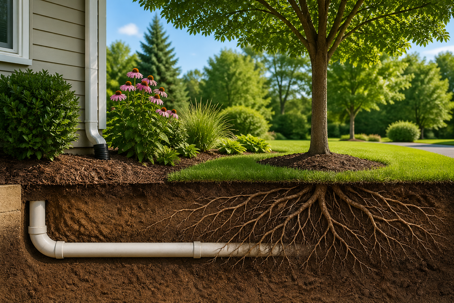
You probably don't think about your sewer line when you are choosing trees or planning a new garden bed, but your landscaping can quietly decide whether your drains keep flowing or start backing up in a few years. A new shade tree or hedge feels like a simple improvement to your yard. Underground, those same roots may already be working their way toward the moisture in your pipes.
In Salem and across the Willamette Valley, many homes sit on lots with mature trees, compacted soils, and older underground lines. If you are redesigning your yard, planting a privacy screen, or dealing with slow drains that keep coming back, the connection between landscaping and plumbing is not theoretical. The layout of your yard and the plants you choose can either protect your sewer and drain lines or steadily push them toward failure.
At DoneRite Plumbing & Drain, LLC, we have spent more than a decade maintaining residential and commercial plumbing systems in Salem, Keizer, Dallas, Monmouth, Silverton, and surrounding communities. We see, week after week, how small choices in planting and irrigation show up later on our sewer cameras as root-choked joints and cracked pipes. In this guide, we want to share what that experience has taught us so you can plan your landscaping in a way that prevents plumbing issues instead of creating them.
How Landscaping In Salem Interacts With Your Plumbing
Most sewer lines in Salem properties follow a simple path. A pipe leaves your home, usually from the side facing the street, then runs underground through the yard to connect with the city main near the curb or under the pavement. Water lines often follow a similar logic. The trench that was dug for those lines disturbed the soil, then was backfilled. That disturbed soil behaves differently from the undisturbed ground around it and roots notice the difference.
Roots prefer looser, aerated soil where they can move easily and find oxygen and moisture. The original pipe trench often creates a soft corridor that acts like a highway for roots from street trees, front-yard maples, or larger shrubs. As those roots follow the trench, they eventually encounter your sewer lateral. If the pipe is older or has any weak spots, the roots will try to tap into the moisture inside.
In Salem and the wider Willamette Valley, we often see this pattern in older neighborhoods with mature trees along the street and in front yards. A lawn may look perfectly healthy, yet our camera shows roots wrapping around and entering the pipe just a few feet below. Landscapes that concentrate plantings along the front setback or that add heavy irrigation in narrow strips over the lateral are especially likely to interact with the plumbing in ways the homeowner cannot see until a clog appears.
Even in newer developments, landscaping still matters. If you or a previous owner added planting beds, gravel paths, or retaining walls without considering where the pipes run, new roots and shifting soil can put stress on joints and transitions. Understanding this basic interaction between yard and plumbing is the first step toward preventing problems.
How Tree Roots Actually Get Into Sewer & Drain Lines
Many people picture big, thick tree roots cracking solid pipes in half. What we see in the field looks different. Roots are not usually strong enough to snap an intact, properly installed pipe on their own. Instead, they are opportunists. Fine feeder roots search for tiny sources of moisture and oxygen. When they find a hairline crack, a loose joint, or a gap in a deteriorated section, they slip inside and start taking advantage of the constant water supply.
Once a few fine roots enter the pipe, they begin to grow in the direction of flow and branch out. Inside the line, they catch toilet paper, grease, and other debris that should move smoothly to the city main. Over time, this mass of roots and debris becomes a dense mat that slows water and eventually blocks the pipe. As the roots thicken, they push against the edges of the crack or joint, widening it further and allowing more roots to enter from outside.
The pipe material under your yard has a lot to do with how vulnerable it is. Many older Salem homes still have clay or cast iron laterals. Clay pipes are made in short sections with joints every few feet. If those joints lose their tight seal as the ground settles, roots can enter at each connection. Cast iron is stronger but can corrode and develop rough spots and cracks that roots exploit. Modern PVC is smoother and often installed in longer runs with glued joints, which tend to be more resistant, although poor installation or shifting soil can still create weak points.
During camera inspections, we almost always find that significant root intrusion started at existing weaknesses instead of random spots. That is why repeated snaking without addressing the underlying pipe condition is rarely a lasting solution. The roots are responding to moisture and oxygen escaping where the pipe is already compromised, and they commonly return until those vulnerabilities are corrected.
Our focus at DoneRite Plumbing & Drain, LLC is on the structural health of your system, not just getting water moving for the next few weeks. When we see how roots are getting into a line, we explain whether the issue is limited to a few joints that need attention or whether the entire material has reached the end of its service life. Understanding the actual mechanism gives you a clearer picture of what will prevent future trouble.
Landscaping Choices In Salem That Raise Your Plumbing Risk
Some yards are far more likely to develop plumbing problems than others. The plants themselves are part of the story, but the way they are placed and the way water moves through the property matter just as much. We routinely find that certain landscaping patterns in Salem correlate with more frequent root related calls.
One common pattern is planting large trees with wide reaching root systems too close to the assumed path of the sewer line. Homeowners often like to center a shade tree in the front lawn or line the driveway with ornamental trees. If that line of trees sits over or beside the original pipe trench, their roots are given a direct route to your lateral. Dense hedges installed right along the front setback, where laterals often cross, can create the same issue on a smaller scale.
Another risk is creating thirsty planting zones in narrow strips. For example, adding a high water garden bed in the strip between sidewalk and street, or directly over the sewer path from house to curb, keeps that soil constantly damp. Roots naturally move toward those damp zones. As they fill the trench area, the likelihood that they will reach a weak joint or crack increases every year, especially in older clay or cast iron pipes.
Irrigation design plays a role too. In the Willamette Valley, with its wet winters and dry summers, many yards rely on automatic sprinklers or soaker hoses. Systems that leak, overspray, or concentrate water along a single line over the lateral keep the soil around the pipe wetter than the surrounding ground. That moisture gradient pulls roots right along the pipe. Very compacted or poorly drained soils can also contribute to ground movement that flexes the pipe and opens joints where roots can get in.
Over ten years of camera work and repairs, we have seen the same combinations cause trouble again and again. A mature tree near the curb aligned with the front bathroom. A row of fast growing shrubs over a shallow lateral. A new garden bed over the only soft strip in an otherwise compacted yard. Recognizing these higher risk choices before you plant, or before a small plumbing issue becomes a major one, puts you back in control.
Smarter Tree & Shrub Placement To Protect Your Pipes
Protecting your plumbing does not mean removing every tree or avoiding new plantings. It means placing them with a better sense of where your pipes run and how roots travel. You do not need a formal map to make better choices. With a few simple observations, you can make educated guesses about your sewer line path.
Start by locating your main sewer cleanout. This is often a capped pipe near an exterior wall, usually on the side of the house facing the street. From that point, imagine a reasonably straight path to where the city main likely runs, typically under or near the street. While actual lines can have bends and offsets, this line gives you a rough corridor to treat with extra caution when you consider new trees or dense shrubs.
As a general principle, the larger the mature tree, the farther its root system can extend. Large shade trees that will eventually develop broad canopies and deep roots are usually safer when planted well outside that estimated sewer corridor, not just a few feet away. Smaller ornamental trees and shrubs have more compact root systems, but even they can cause trouble if they are massed directly over shallow pipes or in a continuous hedge over the lateral.
Existing mature trees deserve special attention. If a large tree already sits close to your probable sewer path and you have had recurring clogs, it is worth having your line inspected before investing more in the surrounding landscape. In some cases, targeted root pruning, strategic pipe repair, or even tree removal might be the most cost effective long term choice. In others, the pipe may be in good condition and simple monitoring is enough.
We can take the guesswork out of this process. By running a camera through your sewer and using modern locating equipment, we can give you a practical understanding of where your line runs and what condition it is in. That information lets you and any landscaper you work with design planting schemes that give larger root systems space away from vulnerable pipe sections instead of building costly landscaping directly over a problem area.
Using Maintenance & Inspections To Stay Ahead Of Root Problems
Even with thoughtful landscaping, roots will always be part of the environment in Salem. The goal is not to eliminate them, it is to keep them from turning into blockages or structural failures. Regular maintenance and inspections are how you stay ahead of that curve, especially if your property already has mature trees or a history of slow drains.
A sewer camera inspection is one of the most useful tools we have for preventive care. During an inspection, we run a small camera through your main line from an access point, such as a cleanout. The camera shows us the inside of the pipe in real time. We can see where joints are offset, where roots are entering, where scale or corrosion is building up, and where there might be cracks or low spots that hold water.
When we find roots starting to intrude, mechanical cleaning or hydro jetting can often remove them before they have caused significant damage. Mechanical cleaning uses cutting heads on a cable to slice through root masses and clear blockages. Hydro jetting uses high pressure water to scour the inside of the line and push loosened material downstream. Neither method repairs a cracked or misaligned pipe, but they restore flow and can buy time while you plan a structural fix if needed.
For many Salem homes with large trees near the sewer path, a practical maintenance interval is to have the line checked every few years instead of waiting for a full blockage. If you have already had one significant root related clog, shorter intervals may make sense until we see how quickly roots return. Homes with newer PVC lines and minimal plantings near the lateral may only need occasional checks, especially before major landscaping or if new symptoms appear.
Our use of modern diagnostic equipment means we do not have to guess about what is happening underground. We can show you footage of your own pipes and explain, in straightforward terms, whether cleaning alone is appropriate or whether a segment is likely to keep failing until it is repaired or repairs. That clarity helps you choose options that match your budget and long term plans instead of reacting to emergencies.
Planning New Landscaping With Your Plumbing Map In Mind
If you are starting a new landscaping project or considering a major yard refresh, this is the ideal time to think about your plumbing. The cost of a camera inspection and simple planning up front is often far less than the cost of tearing up new hardscaping or replanting beds after a surprise sewer failure.
Before you finalize a design that adds large trees, deep footings, or extensive irrigation, consider having your sewer line inspected and its route identified. Even a basic understanding of where the pipe runs and how deep it is allows you to place plantings, patios, and walls more intelligently. You might shift a tree a few feet, move a raised bed, or re-route a drip line, small adjustments that significantly reduce future risk.
When you work with landscapers or contractors, bring plumbing into the conversation early. Let them know where your line runs and whether there are known weak spots. Many professionals will adjust their plans to avoid heavy root masses or deep excavations over the main lateral if they have that information. Without it, they may unknowingly place major root systems directly over an already stressed pipe.
At DoneRite Plumbing & Drain, LLC, we combine this planning with transparent, upfront estimates and flexible options. If an inspection shows a vulnerable section of pipe in the same area where you plan to invest in new landscaping, we can outline different approaches, from targeted repair to larger upgrades, along with costs. That way, you can decide whether to address the plumbing first, phase work over time, or proceed with landscaping and monitor the line, instead of being surprised later.
Signs Your Yard Is Already Hinting At A Plumbing Problem
Sometimes your yard starts telling you about a plumbing problem before anything dramatic happens inside the house. Recognizing these early signals can save you from a full backup or a trench across a newly planted lawn. They are easy to overlook if you are not sure what to watch for.
One common sign is a strip of grass that always looks greener and healthier than the surrounding lawn, especially if it lines up with the likely path of your sewer line. A small leak from a cracked or offset pipe can act like constant underground watering and fertilizing in that narrow zone. Soggy spots that do not dry out, even when you cut back irrigation, can point to a more active leak in the same way.
Subtle ground settling or depressions along a straight line between your home and the street may also hint at trouble. If soil is washing out around a damaged pipe, the surface can slowly sink. In Salem’s wetter months, these low areas might hold water or turn muddy. In some cases, tree roots near that line will suddenly flourish compared to similar trees elsewhere on the property, drawing extra moisture from the leaking joint.
Inside the home, recurring clogs in multiple fixtures, especially on lower floors, slow draining tubs and showers, or gurgling toilets after heavy rain on a tree lined street often point toward a developing issue in the main line rather than isolated fixture problems. If you clear a clog and the problem returns within a short period, or if more than one drain misbehaves at the same time, the odds increase that roots or structural issues in the main are involved.
Because we prioritize responsive scheduling and clear communication, we can typically come out, inspect, and explain what is going on before these hints turn into emergencies. Our goal is to give you a factual assessment of your system so you can act based on what is actually happening underground, not guesswork.
How DoneRite Plumbing & Drain, LLC Helps Salem Homeowners Protect Their Pipes
Protecting your plumbing through smarter landscaping starts with understanding what is really happening in your pipes. Our process is built around that principle. When you contact us about recurring clogs, suspicious yard signs, or planned landscaping, we begin with a detailed diagnostic visit. We locate access points, run a camera through your line, and, when needed, use locating equipment to mark the pipe’s route in your yard.
Once we have a clear view inside the line, we walk you through what we see, joint by joint. If roots are present, we point out where they are entering and how severe the intrusion is. If we see cracks, corrosion, or low spots that collect water, we note those as well. From there, we outline practical options, ranging from targeted cleaning and periodic maintenance to repairing or replacing vulnerable sections. Our estimates are transparent and upfront, so you understand the scope and cost before any work begins.
When repairs or replacements are needed, we use high quality materials and proven techniques that improve the durability of your system and reduce future root intrusion risk. We take care to protect your lawn, beds, and hardscapes while we work, laying down coverings and keeping the site orderly. Because we are licensed, bonded, and insured, and we follow applicable codes, you can be confident that the finished system is ready for the daily demands of your household.
Before we leave, we test the system under normal flow conditions and verify that everything drains as it should. Our follow up process ensures that you are satisfied with both the mechanical performance and the condition of your property. Over time, we aim to be a reliable resource you can call whenever you are planning changes to your yard or notice new signs from your plumbing, so small issues stay small.
Protect Your Yard & Your Plumbing With One Thoughtful Plan
Your landscaping and your plumbing will always share the same ground. In Salem and the Willamette Valley, where mature trees and aging infrastructure often meet, a little planning can mean the difference between a stable, efficient system and recurring, disruptive repairs. By understanding how roots follow trenches, how they exploit weak pipes, and how plant placement and maintenance shape that risk, you gain real control over what happens underground.
If you are seeing early warning signs in your yard, have had repeated clogs, or are planning new trees or hardscaping, this is the ideal time to map and assess your sewer line. We can give you a clear picture of your system, explain your options in straightforward terms, and help you protect both your landscape and your home’s infrastructure for the long term. To discuss your property or schedule an inspection, contact DoneRite Plumbing & Drain, LLC today.